FAQs
Everything you need to know about the World’s Highest Marathon
Eligibility
-
No. The founding purpose of BecomingX is to help people achieve extraordinary things. You don't need to have completed a marathon before applying to this, although if you have, we'd suggest a minimum time of 5 hours 30 minutes under normal circumstances (i.e. running at sea level) to take part.
-
We are only accepting applications from those 18+. There is no upper age limit.
-
No. We have a robust acclimatisation programme to prepare you for operating at this altitude. You will feel more confident if you have been to altitude before (4,000m+) but this is not a formal requirement to take part.
-
We ask that every applicant ensures they are in good health and declares any potential medical issues at the point of application. We do not require a doctor’s certificate as standard, but may request one if our race doctor believes any declared condition warrants further investigation.
The expedition
-
Runners will be supported by two expedition leads and a support team, 3 local guides, one doctor, one photographer and a team of drivers from the local community.
-
Yes. We will have a professional photographer with us throughout and the images will be made available to all for personal use.
-
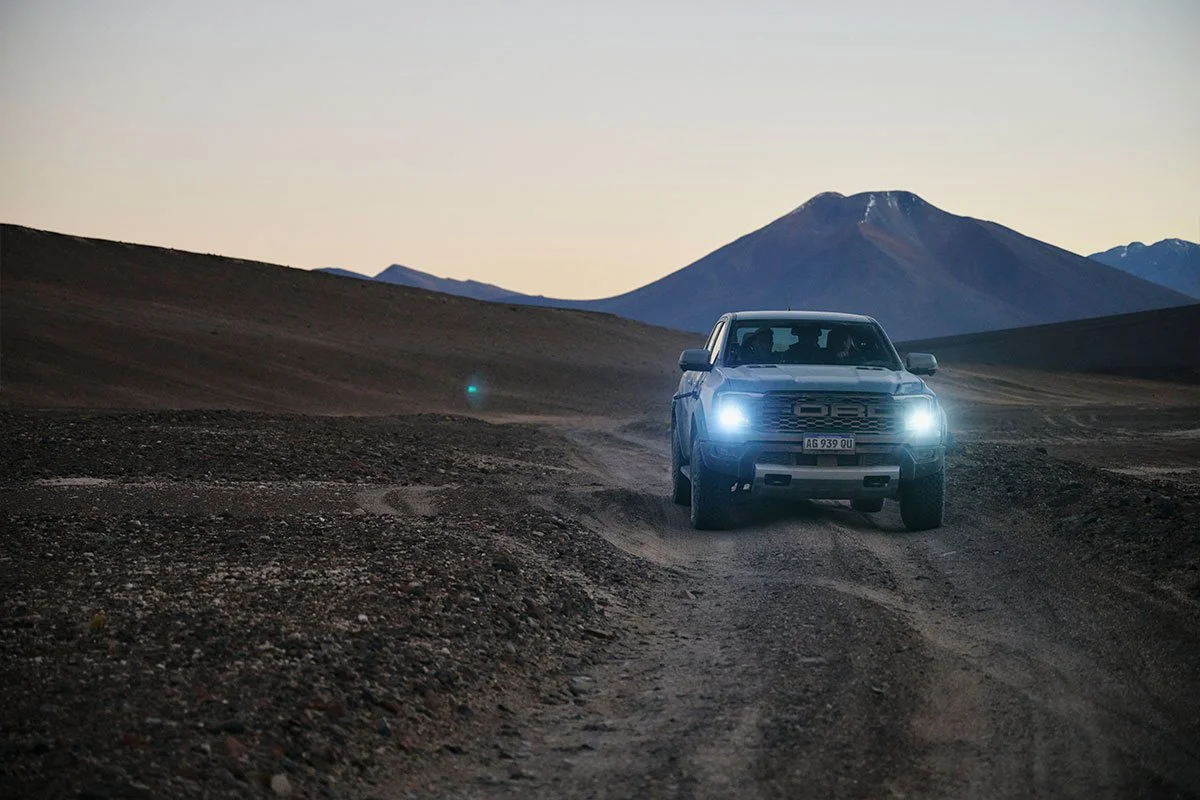
No… but it might help. We will be using a combination of a community bus in the far south and a small convoy of 4X4s. Driving will likely be a combination of local guides and potentially some of the participants. We have a capable support team, but we ask about driving experience as we set the expectation this is a self supported expedition. The offroad driving is not 'technical' and if you do drive, no prior experience is required.
-
Climbing Uturuncu is optional - you don’t have to do this if you aren’t feeling great. This is a key part of the expedition and will help with acclimatisation, but it will also expend some energy - so it is entirely your decision. We’d stress that we don’t expect the marathon to be ultra competitive (there’s no podium here!), so would encourage everyone to experience this unique climb.
-
We are travelling at the start of the dry season, so we can expect very little, if any, rain. What we will experience instead is a wide range of temperatures.
During the day, temperatures are typically around 10°C to 18°C (and can feel warmer in direct sun), but once the sun drops, it cools quickly. In La Paz, nighttime temperatures are likely to fall close to freezing, and at higher altitudes at our base camp, temperatures may drop as low as –20°C overnight.
Winds can also pick up, particularly at higher altitudes and in exposed areas, which can make it feel significantly colder than the air temperature suggests.
The marathon
-
Yes - albeit needing an explanation! in 2026 we started the World’s Highest Marathon at 6,893m on the summit of Ojos del Salado and finished at 4,340m.
There are two recognised altitude marathon records. The “Highest Marathon” record is based on the highest point reached, while the “Highest Marathon Distance Run (Team)” record - which reflects the actual running of the marathon - is based on the lowest point reached during the marathon.
In 2027, the lowest point on the course will be 4,396m, which is 56 metres higher than in 2026 - setting a new world record altitude for participants running the full marathon distance.
-
It's tough at altitude. Even for very fit and experienced runners, the chances are you will be running and walking. With only 57% of the oxygen compared to sea level, it will certainly be much slower than you would do at sea level!
-
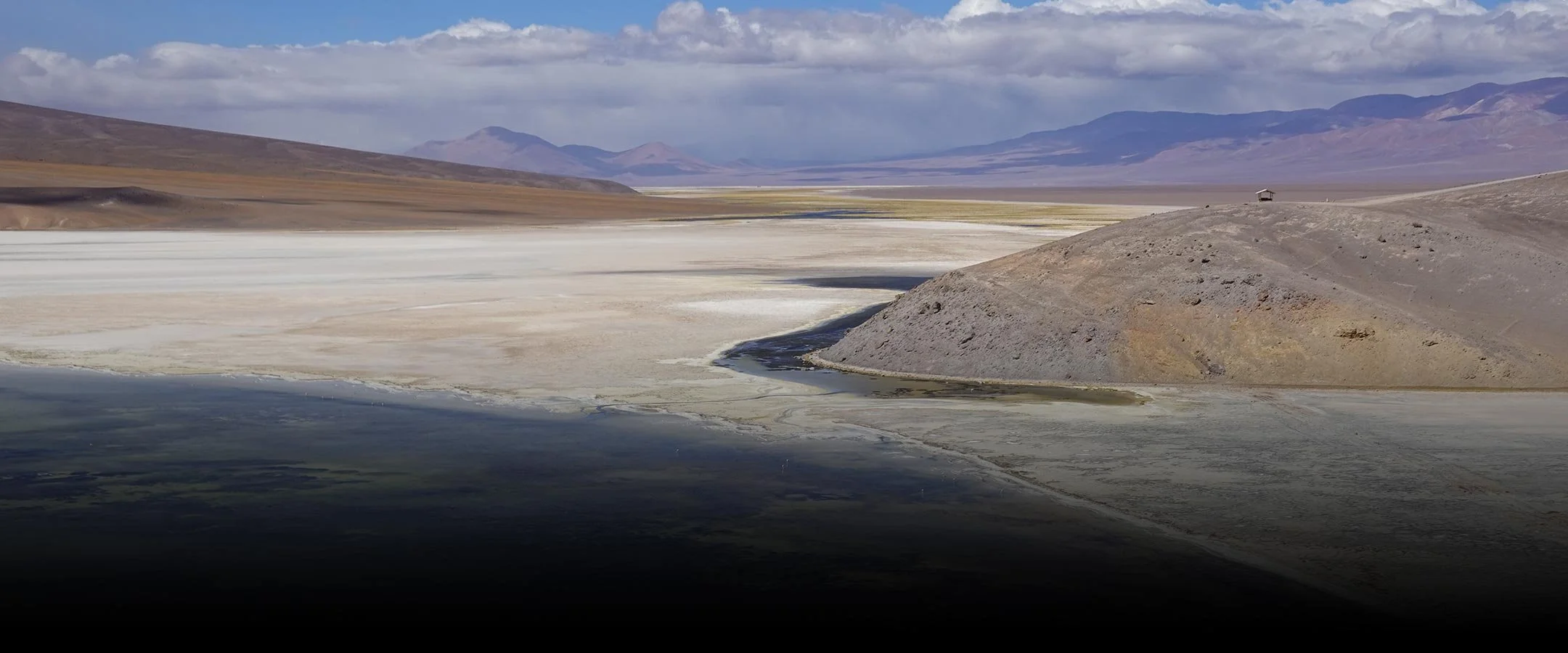
We are running through desert in one of the driest places on earth. The surface is primarily compacted gravel and sand. It may be soft sand in places, but you should expect running on the equivalent of a gravel track.
-
The temperatures will vary hugely throughout the day. Early in the morning and overnight, it will be very cold (-10 to -20c), but during the day can be very warm in the direct sun. Whilst the ambient temperature may only be 10 - 15c, it will feel hotter and managing hydration and skin exposure will be key. The wind will likely be a factor, making it feel colder with windchill.
We will start the marathon at approximately 9.30am when the sun is up and temperatures have risen significantly. -
You won’t be doing this alone. Whilst self-sufficiency and team collaboration are essential on this expedition, the marathon is supported throughout.
We will have a number of checkpoint locations along the route, each clearly marked and stocked with drinks and basic supplies. Alongside this, our mobile support vehicles will be moving up and down the route, providing additional water, encouragement, and medical support if needed.
Every participant will carry a GPS tracker, and our team will be monitoring positions throughout the day. We also use radios across the support team, so we always know where people are and can respond quickly if support is needed.
Our goal is simple: to make sure everyone feels supported, safe, and able to keep moving forward.
-
Yes. We operate this as a formal marathon in line with the athletics federation rules, with set timings and a need to show evidence (through GPS records and witness reports) that everyone has completed the full distance.
-
No - we do not have a pre-determined cut off time. We would hope everyone can finish within 10 hours, although this depends on the conditions. We will do everything possible, within safety constraints, to keep the finish line open until the last person finishes.
-
Yes - we provide water throughout the expedition element of the trip, and specifically for the marathon. However, we do mandate that everyone carries at least 1 litre of water on them when leaving a checkpoint.
-
Your safety always comes first. If needed, we’ll bring you into a vehicle and the support team will look after you, with our doctor available to assess and support you if required. There is absolutely no pressure to continue if you don't feel able to.
Health and safety
-
We have a professional doctor joining the expedition who will be responsible for medical health. In addition, our expedition lead, Gavin Bate, is highly trained in mountain medicine and will provide additional support throughout the event.
-
This very much depends on the symptoms and severity. People acclimatise at different rates and can feel the symptoms of altitude from about 3,000m+. There are a number of approaches to dealing with altitude sickness - ranging from rest and hydration, to medical interventions (doxyclycine and dexomethazone) to simply reducing altitude. The team will actively monitor everyone (and we will teach you how to support yourselves and your team mates).
-
We will have a limited supply of oxygen available to support in instances of people severely impacted by altitude. However, this is relatively unlikely given the altitude profile and long acclimatisation period we have prior to the marathon.
-
Yes - throughout the expedition, we will regularly check in with participants to monitor how people are adapting to the altitude.
This may include simple checks such as oxygen saturation readings, heart rate monitoring, and symptom discussions. These checks help us spot potential issues early and keep everyone moving safely through the acclimatisation process.
Accommodation
-
We always stay in the best accommodation available to us in each location.
In La Paz, this will be a 5-star hotel. In Copacabana (Lake Titicaca) and Uyuni, where options are more limited, you can expect comfortable 4-star equivalent hotels.
In Quetano Chico, accommodation becomes much simpler, and we will be using all of the available hotel rooms in the area. At base camp, accommodation is more basic still - a mix of hostel-style rooms (indoors with beds) and expedition tents outside.
At this altitude and in such a remote setting, facilities are naturally more limited. There is no hot water for showers or heating, although there are thermal hot springs, but the experience of staying in such a remote and remarkable place more than makes up for it. -
No - wherever possible, each participant will have their own hotel room or tent.
At base camp, indoor accommodation is more limited, so if you choose to sleep indoors, this may involve sharing in a hostel-style setup. However, we do everything we can to maximise comfort and personal space throughout the expedition. -
At base camp, facilities are relatively basic, but functional. There will be toilets available, and opportunities to wash (don't expect hot water!) including access to nearby thermal hot springs, which will be one of the highlights of the experience.
-
Yes - we can cater for most dietary requirements.
We simply ask that you let us know your needs in advance, so we can plan accordingly. Our team is experienced in managing a wide range of dietary preferences and restrictions, even in remote environments. -
Yes - in most locations, you will have access to internet.
The higher-end hotels we stay in (La Paz, Copacabana, and Uyuni), all have reliable Wi-Fi. In the smaller towns, connectivity can be more limited, so it’s best not to rely on it there.
During the expedition phase, we travel with Starlink terminals, which allow us to provide internet access even in remote locations. This means that while you’re at base camp, there will still be opportunities to connect with home if needed. -
Mobile signal is available in larger towns and cities, but becomes limited as we move into remote areas where we tend to rely more on Starlink and sat phones.
Kit
-
No - we are not doing any technical climbing, so specialist climbing equipment is not required.
That said, conditions can be extremely cold at times, so good quality warm layers and a down jacket are essential. Depending on recent snowfall, crampons or ice spikes may be required for the Uturuncu climb, but we will advise you well in advance if these are needed. -
Yes - we will provide a detailed kit list to everyone who secures a place.
There are no surprises in what’s required. The kit is mainly cold-weather trekking gear and standard running equipment, and we will guide you through everything so you feel fully prepared. -
We typically recommend trail running shoes, ideally paired with sand gaiters to stop sand and fine dust getting into your shoes. Comfort and familiarity are key - this isn’t the place to try brand-new shoes for the first time.
-
Yes - we provide a selection of branded expedition kit, including a hard-wearing softshell jacket, two race T-shirts, a long-sleeved base layer, a kit bag, and a buff.
These items are designed to be practical, durable, and suited to the conditions you’ll experience. -
Yes - if you’re missing specific items, we can help advise on rental or purchase options.
Many participants already have most kit, but we’re happy to guide you toward trusted suppliers and practical solutions so you don’t buy anything unnecessarily.
Payments and fundraising
-
The cost for the expedition is £8,500.
This includes: hotel accommodation, refuges & tents, (almost) all meals, internal return flight from La Paz to Uyuni, guiding & support, preparation support, kit (jacket, t-shirts, long sleeve t-shirt, kit bag & buff), internet in camp, 4×4 vehicles & fuel.
It does not include: international travel to and from La Paz, travel insurance, visa/vaccinations (typically not required), airport transfers to/from La Paz, or any costs incurred by an early finish.
-
We partner with the award-winning adventure company Adventure Alternative, who manage the expedition logistics on the ground.
Once you’ve secured a place, you’ll register with Adventure Alternative and create an online account, where you can view invoices, make payments, and manage your booking easily. -
Yes - we ask for a £1,000 deposit to secure your place. This is payable by bank transfer within two weeks of being offered a place.
-
The remaining balance is due by February 2027, when we make final payments to our providers in Bolivia. We’ll send reminders well in advance so you have plenty of notice.
-
Yes - we strongly recommend that everyone has appropriate travel insurance for this expedition.
Your policy should include cover for high-altitude trekking (above 5,000m) and emergency evacuation if required. We can recommend trusted providers who offer suitable cover, including companies such as Sports Cover Direct and Campbell Irvine Direct.
-
Our cancellation terms are managed by Adventure Alternative, who oversee the expedition logistics.
You can read their full cancellation policy here:
https://www.adventurealternative.com/policies/terms-and-conditions/ -
There is no mandatory fundraising, but we would be delighted if you used this opportunity to fundraise for BecomingX Foundation, which helps disadvantaged young people realise their potential.
You can of course fundraise for any charity of your choice.
Why you can do this.
BecomingX has spent years working with people of all abilities to help them achieve extraordinary things. We understand what it really takes to pull off something like the World’s Highest Marathon. At first, there is often an immediate dismissal: “I can’t do that.” The self-doubt. The questioning of one’s ability.
But with experience, the highest performers learn to ask different questions: “What would need to be true to complete this?”, “How can I get myself ready?”
It’s always hard. Every element - the preparation, the cost, the commitment. If it wasn't, this wouldn't be a world record. But the truth is, everyone has the potential to achieve extraordinary things. Our job at BecomingX is to help you learn how.
So if you are doubting whether you could complete the World's Highest Marathon, then good. That doubt is also a recognition that maybe you actually can do this, and you can start taking the steps to do something truly extraordinary. Something that you will remember for the rest of your life.